
Why Precision Measuring Matters
Every great innovation—whether it’s an aircraft engine, a medical implant, or a microchip—depends on one fundamental truth: measurement accuracy determines quality.
In an era defined by microns and nanometers, precision measuring has become the backbone of manufacturing, design, and engineering.
From industrial plants to research labs, the ability to measure precisely ensures efficiency, reliability, and compliance. Without accurate measurement, even the most advanced technologies risk failure.
That’s why companies like Bombay Tools Supplying Agency (BTSA) have spent decades developing and supplying advanced precision measuring instruments, tools, and systems that enable industries to achieve world-class standards of quality and performance.
2. What Is Precision Measuring?
Precision measuring refers to the science and practice of obtaining exact, repeatable measurements of components, assemblies, and physical quantities. It involves specialized devices and systems that provide readings with extremely tight tolerances—sometimes to fractions of a micron.
It is a critical part of metrology, the broader field of measurement science, which underpins industries ranging from automotive to aerospace and medical manufacturing.
Key Goals of Precision Measuring
- Ensure product dimensions and performance meet design specifications.
- Maintain consistency across production batches.
- Support calibration and inspection routines for continuous quality assurance.
- Reduce waste and rework through early defect detection.
3. The Evolution of Precision Measuring Instruments
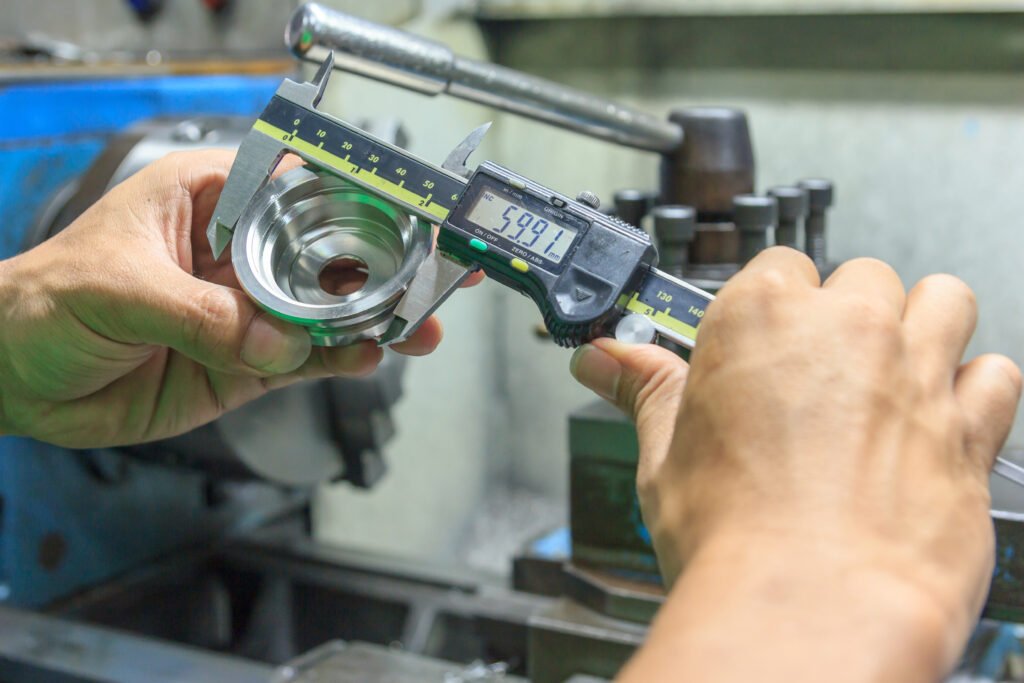
From traditional vernier calipers to advanced coordinate measuring machines (CMMs), the field of precision measuring instruments has evolved tremendously.
Traditional Instruments
- Micrometers – Used to measure small distances or diameters with high accuracy.
- Dial Gauges and Height Gauges – Common in dimensional inspection.
- Vernier Calipers – Widely used in workshops for length and depth measurements.
Modern Instruments
- Digital Micrometers and Laser Scanners – Offer real-time readings with digital accuracy.
- CMMs (Coordinate Measuring Machines) – Automatically capture geometric data points in 3D.
- Optical and Vision Systems – Provide non-contact measurement for delicate or complex parts.
The shift toward digital and automated precision measuring instruments has transformed industries, allowing faster inspections and enhanced data traceability.
4. Precision Measuring Tools: Enabling Everyday Accuracy
While “instruments” often refer to advanced measurement devices, precision measuring tools are the practical backbone of workshops and production floors.
Common Types of Precision Measuring Tools
- Feeler Gauges – Measure small gaps or clearances.
- Thread Gauges – Check pitch and diameter of screw threads.
- Bore Gauges – Measure the internal diameter of cylinders or holes.
- Surface Plates – Provide reference surfaces for inspection.
These tools are designed for durability, ease of use, and high repeatability. Their accuracy directly influences the performance of machining, fabrication, and assembly operations.
Role in Manufacturing
Precision measuring tools ensure that each part meets the tolerance limits defined in technical drawings. This makes them indispensable in industries where a few microns can determine functionality—like aerospace, automotive, and medical devices.
5. Precision Measuring Equipment: Bridging the Gap Between Instruments and Systems
The term precision measuring equipment typically refers to larger, often integrated setups used for inspection, calibration, and validation at an industrial scale.
Examples of Precision Measuring Equipment
- Profile Projectors for magnified 2D analysis.
- CMMs (Coordinate Measuring Machines) for 3D measurements.
- Laser Interferometers for alignment and calibration.
- Surface Roughness Testers for texture analysis.
- Roundness and Form Testers for rotational components.
These systems are the heart of modern quality control laboratories. In a factory environment, they ensure that production output aligns perfectly with design tolerances.
Why Equipment Calibration Matters
Even the best precision measuring equipment must undergo regular calibration. This ensures that environmental factors, wear, and time do not degrade performance.
Accredited calibration—especially under ISO 17025 standards—guarantees that all results are traceable to national or international measurement standards.
6. Precision Measuring Systems: The Future of Smart Metrology
In the Industry 4.0 era, precision measuring systems are evolving beyond standalone tools—they are becoming connected, intelligent, and data-driven.
Key Components of Modern Precision Measuring Systems
- Sensors and Probes that capture real-time dimensional data.
- IoT Connectivity for data logging, remote access, and process integration.
- AI Algorithms that predict drift and signal when recalibration is needed.
- Software Platforms that provide visualization, analysis, and report automation.
Benefits for Industry
- Enhanced Efficiency: Real-time inspection reduces downtime.
- Predictive Maintenance: Systems detect measurement deviations before they cause product defects.
- Full Traceability: Digital records comply with ISO and regulatory requirements.
- Reduced Human Error: Automated measurement ensures repeatability and consistency.
Companies like BTSA are embracing and integrating precision measuring systems with smart factories to deliver data-driven quality assurance.
7. Importance of Precision Measuring in Metrology
Metrology and measurement are the scientific foundations of precision. Every calibration, inspection, and test stems from metrological principles that define accuracy, uncertainty, and traceability.
Metrological Traceability
Every measurement result should link back, through an unbroken chain of comparisons, to a recognized reference standard (e.g., a national standard maintained by NABL or NIST).
Measurement Uncertainty
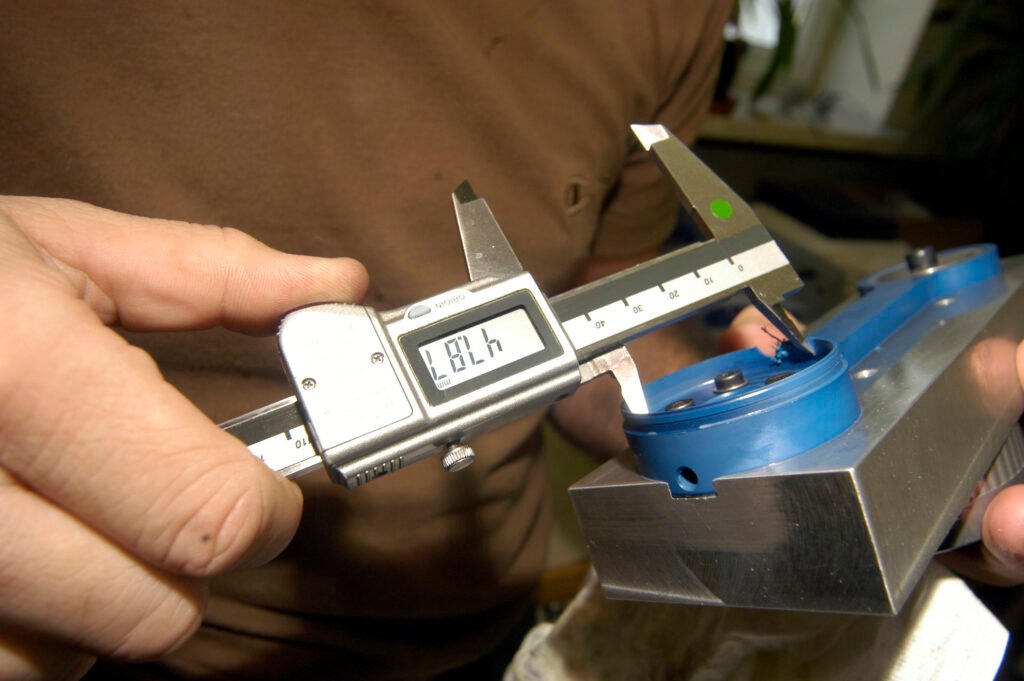
Even the most advanced precision measuring instruments have a margin of error. ISO 17025-compliant laboratories must calculate and declare this uncertainty to maintain transparency and reliability.
Standardization and Compliance
By adhering to international standards like ISO 17025, industries ensure that measurement results are globally comparable—essential for international trade, certification, and safety assurance.
8. Industry Applications of Precision Measuring
Automotive Manufacturing
Precision ensures proper engine performance, fuel efficiency, and safety. From crankshafts to pistons, every micrometer counts.
Aerospace and Defense
High precision ensures aerodynamic performance and safety. Laser-based and coordinate measurement systems dominate this field.
Medical Device Production
Implants, surgical instruments, and diagnostic equipment require stringent dimensional accuracy validated by calibrated measuring systems.
Electronics and Semiconductors
Micron-level precision measuring tools ensure printed circuit boards (PCBs) and microchips perform flawlessly.
Energy and Heavy Engineering
Turbines, pipelines, and industrial components rely on accurate measurement for efficiency and durability.
9. How to Choose the Right Precision Measuring Partner
Selecting the right provider of precision measuring instruments and calibration services determines your long-term success in quality control.
Checklist for Selecting a Reliable Partner
- Accreditation: Choose ISO 17025-accredited labs.
- Expertise: Look for decades of experience in metrology and calibration.
- Comprehensive Portfolio: From handheld tools to CMMs and digital systems.
- After-Sales Support: Calibration, repair, and training services are essential.
- Technology Integration: Ability to link measuring systems with ERP or production software.
A company like BTSA, with over 80 years of metrology expertise, represents an ideal combination of legacy and innovation—offering clients confidence in every reading.
10. Maintaining Accuracy: Calibration and Care Tips
To get the most out of your precision measuring tools and equipment, follow these best practices:
- Regular Calibration: Perform periodic checks under controlled conditions.
- Environmental Stability: Avoid temperature, humidity, and vibration fluctuations.
- Proper Handling: Use gloves and avoid dropping or scratching instruments.
- Storage: Keep tools clean, lubricated, and stored in protective cases.
- Documentation: Maintain calibration certificates and traceability records.
Consistent care ensures your instruments perform accurately and remain compliant with global standards.
11. The Future of Precision Measuring
The future of precision measuring systems lies in automation, connectivity, and intelligence.
Emerging technologies are revolutionizing the field:
- AI-Powered Inspection: Automated defect detection during production.
- Augmented Reality (AR): Overlaying digital measurement data on physical components.
- Cloud-Based Metrology: Secure storage and sharing of calibration data globally.
- Smart Gauges: Self-calibrating devices that transmit accuracy data in real-time.
As industries become smarter, the importance of precise, traceable measurement will only increase.
12. Conclusion: Precision Measuring Defines Modern Quality
From handheld micrometers to AI-driven measuring systems, precision measuring defines the standard of modern manufacturing. It ensures that every product leaving the factory meets stringent specifications—accurate, reliable, and globally compliant.
Organizations that invest in advanced precision measuring instruments, tools, equipment, and systems don’t just ensure quality—they build trust, brand credibility, and market leadership.
As industry demands tighten tolerances, precision will continue to be the language of excellence.
And companies like BTSA—with decades of leadership in metrology and measurement—will continue to set the benchmark for accuracy and reliability in every dimension.


