1.Why IS/ISO/IEC 17025:2017?
In today’s precision-driven industries—automotive, aerospace, defense, medical, and electronics—accuracy isn’t optional. A single micron of deviation can impact product quality, safety, and compliance. That’s why ISO 17025, the international standard for the competence of testing and calibration laboratories, has become the foundation for global measurement assurance.
For more than 80 years, organizations like Bombay Tools Supplying Agency (BTSA) have built their credibility on accuracy and reliability.. By aligning with ISO 17025 standards, they assure customers that every measurement and calibration is backed by internationally recognized procedures.
2. What Is ISO 17025?
ISO 17025:2017 specifies the general requirements for the competence, impartiality, and consistent operation of calibration and testing laboratories. In essence, it ensures that:
- Measurements are accurate and repeatable.
- Equipment is regularly calibrated and maintained.
- Staff are qualified and trained.
- Procedures follow a documented quality system.
Unlike ISO 9001, which focuses on organizational quality management, ISO 17025 focuses on metrology and measurement integrity—the very core of laboratory performance.
3. The Purpose of ISO 17025 Accreditation
Accreditation under ISO 17025 proves that a laboratory has demonstrated both technical competence and management consistency.
Key Purposes:
- Customer Confidence: Clients can rely on accurate results with known measurement uncertainty.
- Regulatory Compliance: ISO 17025 accreditation is recognized by NABL (India), ILAC, and other global bodies.
- International Recognition: Accredited labs gain cross-border credibility through mutual recognition arrangements (MRAs).
- Operational Efficiency: Standardized procedures reduce re-testing, saving time and costs.
For companies like BTSA that provide Calibration Services, ISO 17025 acts as a guarantee of reliability—proving that each gauge, micrometer, and measuring instrument conforms to traceable standards.
4. ISO 17025 and Calibration Services: The Backbone of Quality
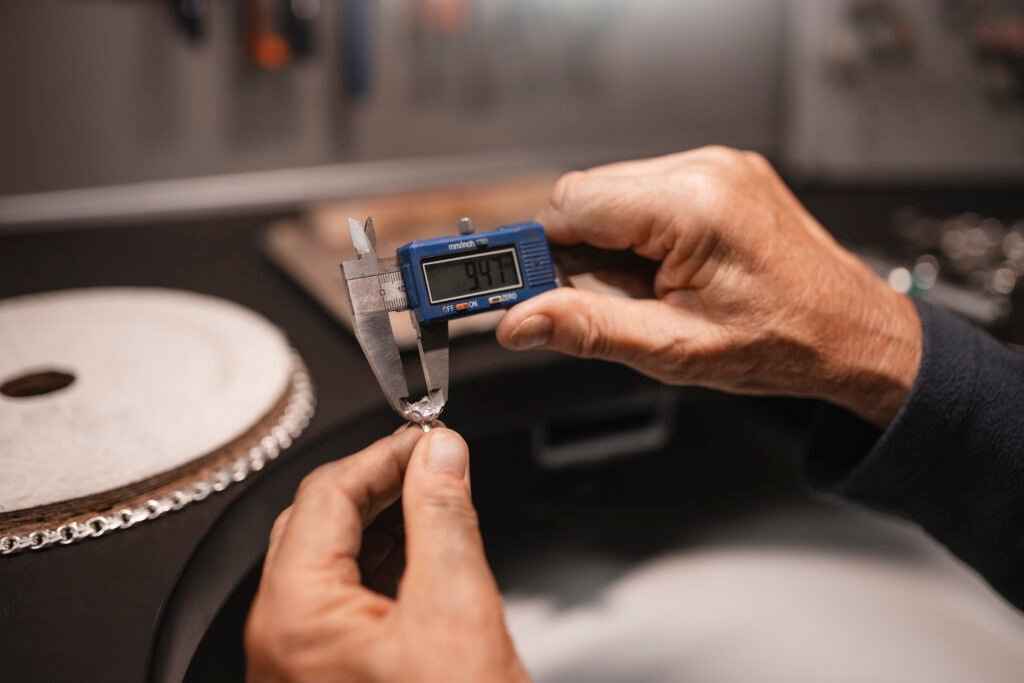
Calibration is the process of comparing a measurement of the instrument against a reference standard to verify accuracy. Under ISO 17025, Calibration Services must ensure traceability to international or national standards (such as NIST or NABL).
Components of an ISO 17025-Compliant Calibration Service:
- Traceable Measurement Standards: Ensuring every instrument relates back to a known reference.
- Environmental Control: Temperature and humidity are monitored during calibration.
- Measurement Uncertainty Analysis: Quantifying how confident you are in a result.
- Equipment Maintenance & Record Keeping: Preventive maintenance logs and calibration histories are mandatory.
At BTSA, calibration is not merely an annual check—it’s a continuous process of validation, integrated with a digital quality-management system that aligns with ISO 17025 protocols.
5. Inside an ISO 17025 Testing Laboratory
A compliant testing laboratory must go beyond just having advanced instruments. It requires a systematic framework of processes, competence, and documentation.
ISO 17025-Driven Requirements for Testing Laboratories:
- Personnel Competence: Staff must be trained and evaluated regularly.
- Test Method Validation: Procedures must be proven to produce accurate, repeatable results.
- Equipment Calibration: Instruments used for testing must themselves be calibrated under ISO 17025.
- Sampling Control: Procedures for how samples are collected, stored, and processed must be defined.
- Data Integrity: Results must be securely recorded, traceable, and tamper-proof.
This standard creates a loop of metrology and measurement integrity—from the calibration of instruments to the final test results that drive decision-making.
6. Metrology and Measurement: The Science Behind Accuracy
At the heart of ISO 17025 lies metrology, the science of measurement. Metrology provides the foundation that connects every reading, calibration, and certification to a unified international system.
The Metrological Chain:
- Primary Standards (national/international references)
- Secondary Standards (reference standards maintained by accredited labs)
- Working Standards (used for daily calibrations in production)
- Instruments (used by technicians and engineers)
Each level of this hierarchy must maintain traceability—the ability to link any measurement to a recognized reference through an unbroken chain of comparisons.
This is where BTSA’s legacy shines. With NABL-accredited laboratories and precision equipment, they bridge the gap between science and industry, ensuring that every product leaving a client’s factory meets measurable, traceable, and certified accuracy standards.
7. How ISO 17025 Strengthens Industrial Sectors
Automotive Industry
Tolerances in the automotive sector are extremely tight. ISO 17025 ensures that every instrument reads correctly, preventing defects in mass production.
Aerospace and Defense
For aerospace, safety and reliability depend on precision. ISO 17025 accreditation ensures that testing and calibration results are defensible and internationally recognized, crucial for export-compliant manufacturing.
Medical Devices
Calibration under ISO 17025 guarantees reliability in instruments that measure life-critical parameters, such as blood pressure, flow rates, and temperature.
Electronics and Energy
From circuit boards to renewable-energy systems, metrology ensures electrical measurements conform to design standards and energy-efficiency targets.
8. Implementation Steps for ISO 17025 Compliance
Achieving ISO 17025 accreditation involves several key stages.
Step 1: Gap Assessment
Analyze existing calibration and testing systems to identify non-conformities with ISO 17025 requirements.
Step 2: Documentation
Develop quality manuals, standard operating procedures (SOPs), uncertainty analysis sheets, and calibration records.
Step 3: Training
Train laboratory staff on measurement uncertainty, traceability, and audit readiness.
Step 4: Internal Audit
Conduct internal audits to ensure system readiness and process adherence.
Step 5: External Assessment
Accreditation bodies like NABL in India perform audits to verify technical competence and management system compliance.
Once approved, laboratories receive an accreditation certificate subject to periodic surveillance audits.
9. Benefits of ISO 17025 Accreditation for Laboratories and Clients
- Improved Measurement Confidence: Clients can trust the precision and traceability of results.
- Reduced Re-Testing Costs: Fewer disputes over measurement discrepancies.
- Enhanced International Acceptance: ISO 17025 is recognized globally through ILAC-MRA partnerships.
- Increased Operational Efficiency: Standardized systems lead to faster turnaround and better resource management.
- Brand Credibility: Accreditation enhances brand reputation, particularly for firms like BTSA that have decades of trust in precision measurement.
10. Challenges in Maintaining ISO 17025 Compliance
While ISO 17025 brings immense benefits, maintaining it requires continuous effort:
- Regular instrument calibration and environmental monitoring.
- Consistent staff training and competency evaluation.
- Ongoing documentation of measurement uncertainty.
- Quick resolution of non-conformities during audits.
Forward-thinking organizations leverage digital calibration management systems to automate record-keeping and ensure real-time compliance tracking.
11. The Future of ISO 17025 and Digital Metrology
As industries move toward Industry 4.0, measurement systems are becoming more connected, intelligent, and automated. ISO 17025 remains the foundation of trust for this transformation, but the future includes:
- IoT-enabled calibration devices for real-time data transfer.
- Blockchain traceability for unalterable calibration records.
- AI-driven measurement analytics to predict equipment drift before it affects quality.
By blending tradition with innovation, leaders like BTSA are redefining metrology and measurement for the digital era.
12. Choosing the Right ISO 17025 Calibration Partner
When selecting a calibration partner, look for these indicators:
- NABL-Accredited Laboratory with ISO 17025 certification.
- Comprehensive Calibration Services across mechanical, electrical, and dimensional domains.
- Quick Turnaround Time with digital reporting and traceability.
- Experience Across Industries — automotive, aerospace, manufacturing, and healthcare.
- Commitment to Continuous Improvement through re-validation and advanced metrology tools.
A partner like BTSA, with over eight decades in the field and a network of accredited labs, offers unmatched expertise in ensuring compliance and precision.
Conclusion: ISO 17025 as a Pillar of Quality and Trust
In a world where precision defines progress, ISO 17025 serves as the ultimate benchmark for credibility, consistency, and confidence. It transforms testing laboratories into trusted validation partners and calibration services into strategic assets that ensure every measurement aligns with international standards.
For manufacturers and service providers, implementing ISO 17025 is not just about compliance—it’s about building a legacy of reliability. For customers, it’s the assurance that every reading, every calibration, and every test stands the test of global scrutiny.
As BTSA continues to embody the spirit of accuracy and integrity, its alignment with ISO 17025 reaffirms its role as one of India’s pioneers in metrology and measurement excellence.