
Quick Answer: A surface roughness tester measures the fine texture of a machined surface and reports it as parameters such as Ra and Rz. A stylus traverses the surface, and a transducer converts the vertical movement into a roughness value. It verifies finish on functional surfaces where sealing, wear or fatigue matter.
What Is a Surface Roughness Tester?
A surface roughness tester quantifies how smooth or rough a surface is. It turns surface texture into measurable numbers that can be compared against drawing requirements.
Surface finish is not visible to the eye in fine detail. The tester provides an objective, repeatable measurement that supports both shop-floor checks and laboratory analysis.
Engineers use it to confirm that parts meet drawing requirements. A consistent finish on sealing faces, bearing raceways and crankshaft journals directly affects product life and reliability.
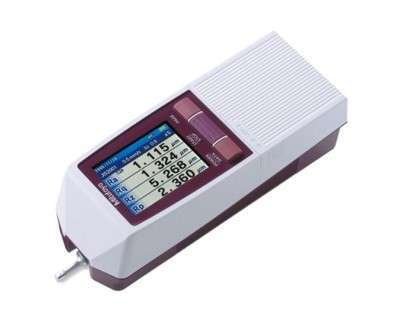
How Does a Surface Roughness Tester Work?
A diamond stylus moves across the surface over a set evaluation length. The stylus rises and falls with the surface profile.
A transducer converts this vertical motion into an electrical signal. The instrument processes the signal into roughness parameters.
A cut-off length filters out form and waviness, isolating fine roughness from larger surface features. Setting the correct cut-off for your feature is essential for a meaningful reading.
What Do Ra and Rz Mean?
Quick Answer: Ra is the arithmetic average roughness across the evaluation length. Rz is the average maximum peak-to-valley height across sampling lengths. Ra smooths out occasional spikes, while Rz is more sensitive to isolated peaks or scratches. Many drawings specify both to control different aspects of finish.
| Parameter | What It Measures | Best Used For |
|---|---|---|
| Ra | Arithmetic average deviation from mean line | General surface finish control |
| Rz | Average peak-to-valley height | Detecting extreme peaks or scratches |
| Rq | Root mean square roughness | Statistical process analysis |
| Rt | Total profile height | Worst-case surface assessment |

What Are the Types of Surface Roughness Testers?
- Portable testers — compact, battery-powered; suited to checks at the machine or on large parts.
- Benchtop systems — wider analysis, more parameters; suited to metrology labs and detailed studies.
- Stylus contact testers — the most common type, suitable for most industrial surfaces.
- Optical non-contact testers — used for soft or delicate surfaces where stylus contact is not possible.
Browse Surface Roughness Testers at BTSA to find the right model for your application.
Why Does Surface Finish Matter?
Finish affects how parts seal, slide and wear. A rough sealing face can leak, while a smooth one holds pressure.
Friction and lubrication depend on texture. Fatigue life also links to surface peaks that concentrate stress. Controlling roughness improves reliability and service life — this is why finish appears on critical engineering drawings.
Industries that rely heavily on roughness testing include automotive, aerospace, bearings, hydraulics and any sector with sealing or wear-critical surfaces.


