
A spirit level uses a sealed vial of liquid with a bubble to indicate horizontal or vertical alignment. An electronic level uses a sensor to provide a digital readout of angle and tilt. Spirit levels are simpler and more rugged. Electronic levels are more sensitive, support data logging, and are preferred for tight-tolerance alignment work.
Why this comparison matters

Levelling and alignment work sits at the heart of machine installation, foundation work, and precision assembly. Get this wrong and every measurement downstream is suspect.
Engineers in India still rely heavily on traditional precision spirit levels for foundation and machine alignment. At the same time, electronic levels are increasingly common in machine tool calibration and high-precision installation.
This guide compares the two technologies in clear terms. The goal is to help QA, maintenance, and installation teams pick the right tool for the job.
What is a spirit level?
A spirit level is a sealed glass or plastic vial filled with a coloured liquid and a small air bubble. The position of the bubble between two marked graduations indicates whether a surface is horizontal, vertical, or tilted.
Precision spirit levels used in metrology are far more accurate than the builder-grade levels seen on construction sites. They are calibrated to indicate angular deviations measured in seconds of arc.
The principle has been used for over two centuries in surveying, machine alignment, and toolroom work. Its endurance is a testament to the design’s simplicity and reliability.
What is an electronic level?
An electronic level uses a sensor, typically a MEMS accelerometer or an electrolytic tilt sensor, to detect the angle of the body relative to gravity. The reading is displayed on an LCD or transmitted to a connected device.
Precision electronic levels resolve angular deviations far finer than a typical spirit level can. They often include data output for record-keeping, statistical analysis, and traceability.
Electronic levels are widely used in machine tool installation, gantry assembly, and any application where alignment data must be recorded.
Side-by-side comparison
| Criterion | Precision spirit level | Electronic level |
|---|---|---|
| Working principle | Liquid vial with air bubble | MEMS or electrolytic tilt sensor |
| Typical sensitivity | Around 0.02 to 0.04 mm/m, depending on grade | Down to 0.001 mm/m or finer on premium models |
| Readout | Visual, analogue scale | Digital LCD, often with data output |
| Range | Limited to small angles near horizontal or vertical | Wide angular range, often ± 30° or more |
| Data logging | Not possible | Available on most models |
| Power | None required | Battery-powered |
| Ruggedness | Excellent, minimal moving parts | Good, but sensitive to drops |
| Environment | Wide temperature tolerance | Battery and sensor limits apply |
| Cost | Lower for equivalent precision class | Higher for equivalent precision class |
| Calibration | Periodic NABL calibration | Periodic NABL calibration, plus battery and sensor checks |
| Skill required | Visual reading skill | Basic digital reading |
| Typical use | Machine tool levelling, foundation alignment, surface plate setup | Machine tool calibration, geometric assessment, precision assembly |
Pros and cons
Precision spirit level
Strengths
- Simple and intuitive to use, with no setup time
- Rugged and reliable in workshop environments
- No batteries or electronics to fail
- Wide operating temperature range
- Lower cost for an equivalent precision class
Limitations
- Visual reading depends on operator skill
- Sensitivity is bounded by vial geometry and liquid properties
- No native data logging or output
- Limited to angles near horizontal or vertical for highest accuracy
Electronic level
Strengths
- Higher sensitivity in precision-grade models
- Direct digital readout reduces reading error
- Data logging and PC connectivity for traceability
- Wider angular range covered by a single instrument
- Useful for geometric assessment of machine tool axes
Limitations
- Requires batteries and is sensitive to charge state
- More vulnerable to drops and impacts than a spirit level
- Sensor drift requires more frequent calibration in some models
- Higher purchase cost for equivalent precision class
Best-fit use cases
The right choice depends on the alignment task, the recording requirement, and the environment.
Choose a precision spirit level when:
- Aligning a machine tool foundation or installing a heavy machine base
- Setting up a granite surface plate or marking-out table
- Performing routine machine alignment in a workshop environment
- Working in dusty, hot, or otherwise challenging environments
- Budget constraints rule out a precision electronic level
Choose an electronic level when:
- Performing geometric tests on machine tool axes during installation or recalibration
- Requiring traceable, recorded data for audit or customer reporting
- Working to tolerances finer than what a spirit level can resolve
- Comparing multiple positions or axes with high repeatability
- The application demands data export for statistical analysis
In many high-precision shops, the two are used together. The spirit level provides a fast first check, and the electronic level confirms the final alignment with recorded data.
What about clinometers and laser levels?
Clinometers and laser levels are sometimes considered alternatives. They serve different but related purposes.
A clinometer measures slope, often over a wider range than either a spirit level or a typical electronic level. Modern digital clinometers can be considered a subset of electronic levels.
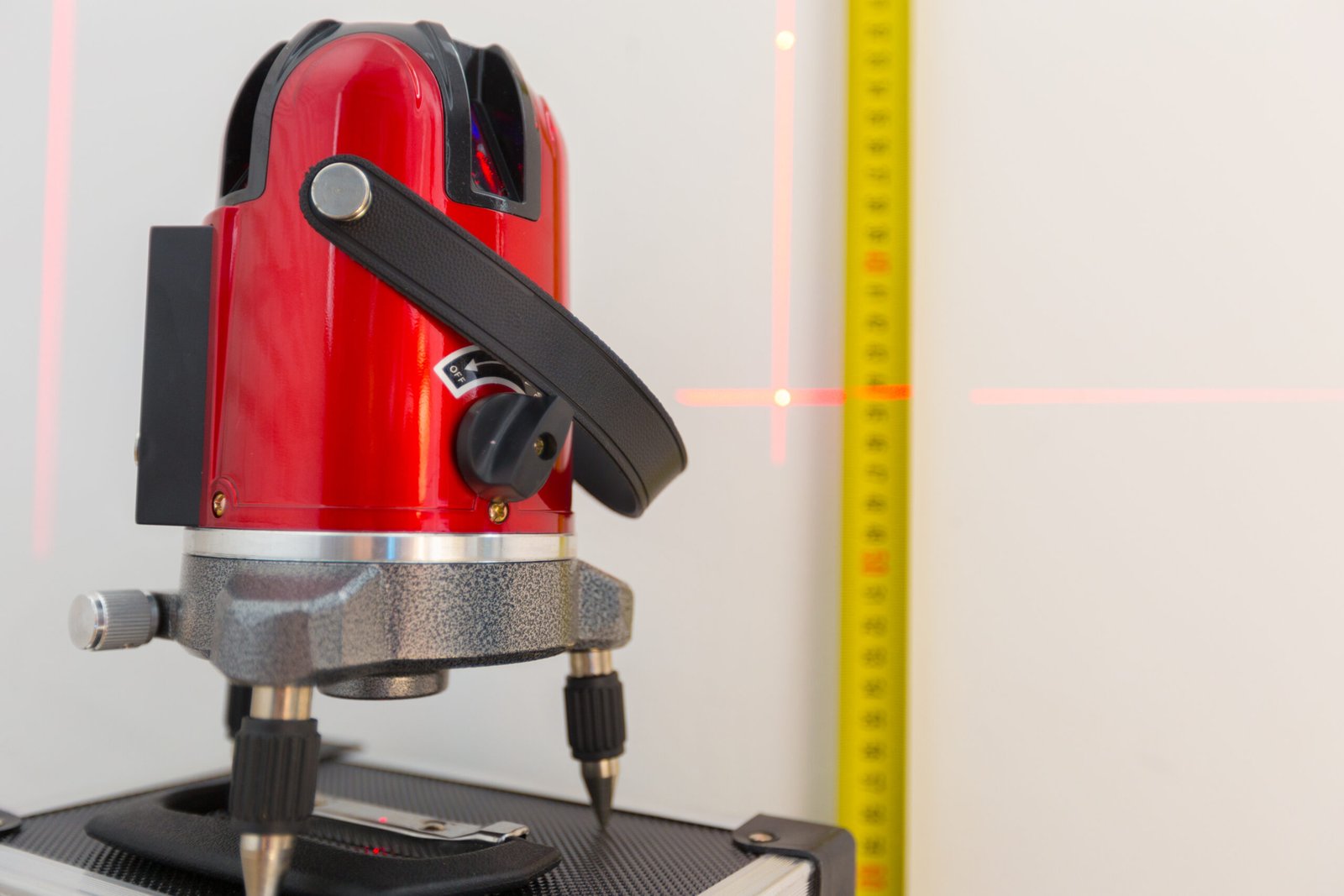
A laser level projects a level line or point over a long distance. It is not a precision metrology tool in the same sense as a spirit or electronic level, but it is useful for layout work over distance.
Choose the right family of tools first, then the right model within the family.
Calibration: a critical shared requirement
Both spirit levels and electronic levels must be calibrated to maintain their stated accuracy. Without calibration, the alignment data they produce is not traceable.
For both instrument types, calibration intervals typically range from six months to a year depending on use. Heavy industrial use, drops, or visible damage trigger an immediate re-calibration.
A NABL-accredited calibration certificate provides the traceable evidence that regulated industries require. Make sure the calibration scope explicitly covers the instrument type and its measuring range.
Sourcing precision levels in India
BTSA supplies precision spirit levels and electronic levels from established metrology brands. Our team helps QA, maintenance, and installation teams pick the right level for their specific application.
We also operate NABL-accredited calibration laboratories for both instrument families. Customers across Mumbai, Chennai, Bangalore, Hyderabad, and Coimbatore use our calibration and supply services for ongoing metrology support.
Frequently asked questions
Is an electronic level always more accurate than a spirit level?
A premium electronic level is typically more sensitive than a typical precision spirit level. However, a poorly calibrated electronic level can be less accurate than a well-maintained spirit level. Accuracy depends on calibration status, not just instrument category.
Can a spirit level be used for machine tool calibration?
A precision spirit level can perform basic machine tool levelling and foundation alignment. Detailed geometric tests of spindles, axes, and squareness usually call for electronic levels or other geometric test equipment.
Do electronic levels work in dusty workshop environments?
Modern industrial electronic levels are designed for workshop environments and tolerate dust and vibration. Sustained heavy dust, very high humidity, or extreme temperature can still affect sensor performance. Spirit levels remain the more rugged choice in the harshest environments.
Are precision spirit levels still used in modern Indian industry?
Precision spirit levels remain a standard tool in machine tool installation, foundation work, and surface plate setup. They are valued for ruggedness, simplicity, and the absence of any power requirement. The technology has not been displaced, only supplemented, by electronic alternatives.
How often should a precision level be calibrated?
A common baseline is annual NABL-accredited calibration for general industrial use. High-precision or critical-installation use cases may justify a six-monthly interval. Immediate calibration is required after any drop or visible damage.
Can the same NABL-accredited laboratory calibrate both spirit and electronic levels?
Most well-equipped NABL-accredited calibration laboratories cover both instrument types within a single scope. Confirm the scope before booking to ensure both your instruments and their measuring ranges are included.


